All episodes

Episode 10 How accreditation could help create an economics fit for these times with Shloka Murarka

Episode 10 How accreditation could help create an economics fit for these times with Shloka Murarka

‧ 51m 41s

Shloka Murarka is an economics Masters student, former activist with Rethinking Economics and now board member of the new UK Association for Quality Economics, AQE, an initiative she helped to launch this year — and the focus of this episode.

Keynes is quoted as having said that “practical men, who believe themselves to be quite exempt from any intellectual influence, are usually the slaves of some defunct economist.”

Well, if that’s true, then the youth protesting around the world are ultimately protesting the ideas put in place by those “practical men” (and let’s face it, they are still mostly men),...
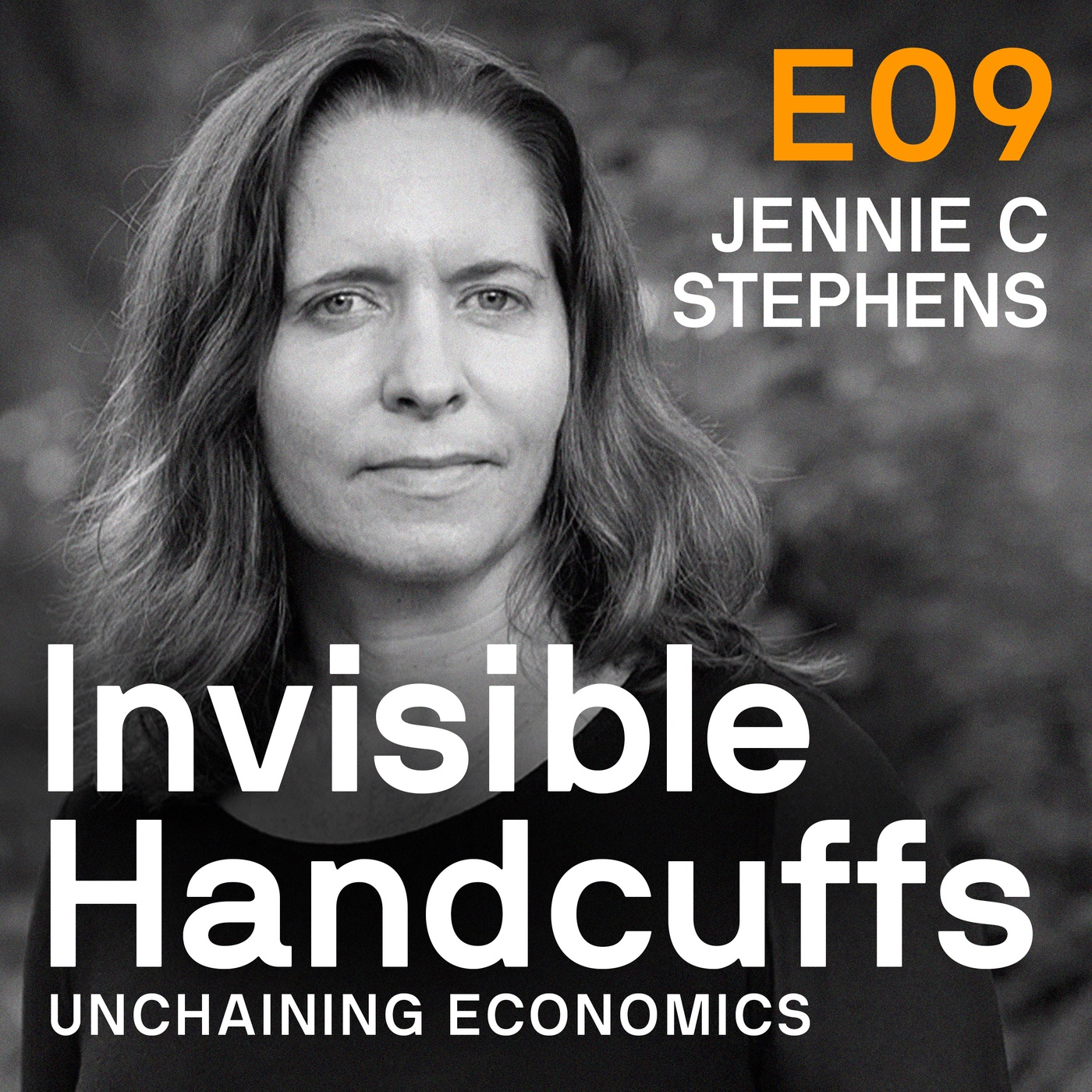

Episode 09: Reimagining the university beyond neoliberal economics with Jennie C Stephens

Episode 09: Reimagining the university beyond neoliberal economics with Jennie C Stephens

‧ 55m 12s

In our first season we explored the various problems with the discipline of economics and how they relate to our crises.
In season two we’re starting to dive into the various ways — given all its flaws and given mounting frustration with the status quo — economics seems to resist reform.
One of the ways is in the institution of education, the university, itself.
That's the topic of discussion with our guest in this episode, Jennie C Stephens, Professor of Climate Justice at the University of Maynooth in Ireland and author of the acclaimed open source book Climate Justice and...

Episode 08: How economics education limits our understanding of what is possible with Stefan Pühringer and Theresa Hager

Episode 08: How economics education limits our understanding of what is possible with Stefan Pühringer and Theresa Hager

‧ 58m 16s

Our guests this episode, which kicks of Season 2, are Stefan Pühringer and Theresa Hager of the Johannes Kepler University in Linz, Austria.

We recorded this conversation at the end of the summer 2026 and are releasing it a few weeks later, during a week in which many European universities are opening their doors for a new wave of students.

Which makes it an apt episode to start with because, it is all about the influence of economics education on our mindsets, on our imaginations, and how this in turn feeds through into what we as a society believe is...

Episode 07: What economists get wrong about risk, technology and progress with Luke Kemp

Episode 07: What economists get wrong about risk, technology and progress with Luke Kemp

‧ 61m 25s

In what way might economists’ flawed understanding of progress be driving the many risks we face today?

This episode's guest is Luke Kemp, Research Affiliate at the Cambridge Center for the Study of Existential Risk and author of the best-selling, critically acclaimed book Goliath’s Curse, The History and Future of Societal Collapse.

Luke actually trained and worked as a climate economist.

Indeed he was drawn to researching civilisational collapse when he saw that climate economic models were tending to look only at average trajectories and not so-called tail risks — these are the worst case outcomes which may have a...

Episode 06: How Eurocentrism in economics locks women and the Global South in crisis with Bhumika Muchhala

Episode 06: How Eurocentrism in economics locks women and the Global South in crisis with Bhumika Muchhala

‧ 76m 3s

Our latest episode of Invisible Handcuffs I was delighted to be joined by Bhumika Muchhala, Political Economist and Senior Advisor at Third World Network as well as Part-Time Faculty at The New School.

Our discussion centres on the problem of Eurocentrism in economics, and its impact on a region where neoliberal economics is arguably doing most damage: the Global South.

Eurocentrism refers to the global dominance of western ideas and ideologies in economics and by default — in our international trade and financial institutions.

In our discussion Bhumika argues that while the violence and looting of political colonisation in the...

Episode 05: From Flat-Earth Economics to Social-Ecological Economics with Clive Spash

Episode 05: From Flat-Earth Economics to Social-Ecological Economics with Clive Spash

‧ 72m 30s

How can philosophy of science help us in the fight to reclaim economics?

That is the topic of discussion in our latest episode of Invisible Handcuffs, where I was delighted to be joined by leading a social-ecological economist Clive Spash.

This discussion brought a whole new language to problems with economics that I have long sensed, but been unable to put into words.

We delve deep into philosophy of science which Clive argues is crucial not just for deconstructing mainstream economics - which Clive says is literally walking us into disaster - but also, if we wish to build a...

Episode 04: Building real world economics with Steve Keen

Episode 04: Building real world economics with Steve Keen

‧ 80m 29s

This week we discuss the need to overthrow the current economic paradigm, and what a new one could look like, with Professor Steve Keen.

Steve is a prolific writer, teacher, blogger and vlogger, known as one of few economists to have predicted the global financial crash and a thorn in the side of mainstream or neoclassical economics for over 50 years.

A former professor of economics at Kingston university in the UK, today you’re most likely to find him on YouTube or one of his weekly online seminars talking about the crisis of capitalism and the various flaws in mainstream...

Episode 03: Why the fight to reclaim economics needs feminist economists with Emma Holten

Episode 03: Why the fight to reclaim economics needs feminist economists with Emma Holten

‧ 46m 48s

My guest this week is Emma Holten. Emma is a feminist economist from Denmark and the author of a best-selling book, Deficit.

Feminist economics, as Emma explains, is the study of the unhidden but vital work of ‘reproduction’ - that textured, often unquantifiable work that goes into making everything else in life, including economic life, possible: care, repair, love, friendship, compassion. But, that which doesn’t lend itself to being monetised and moulded into the kinds of models used by economists today, which have to prove their contribution to economic growth, but without which, no economic growth would be possible.

Emma...

Episode 02: Why economists need multiple perspectives with John T Harvey

Episode 02: Why economists need multiple perspectives with John T Harvey

‧ 80m 54s

This podcast is all about freeing ourselves from the chains of economic orthodoxy: the set of ideas that drive most decisions in governments, institutions around the world and thus are also underpin our crises.

But where do these ideas come from, and why do they persist? What might alternative schools have to offer? And if such alternative perspectives could offer solutions, why are they not more widely taught?

That is the topic of this week’s discussion with Professor John T Harvey of Texas Christian University.

Unlike most economics student John was fortunate enough to have been exposed to a range...

Episode 01: On the Fight to Bring Economics into the 21st Century - with Kate Raworth

Episode 01: On the Fight to Bring Economics into the 21st Century - with Kate Raworth

‧ 60m 31s

In this inaugural episode of Invisible Handcuffs, host Katy Shields speaks with economist Kate Raworth, author of 𝘋𝘰𝘶𝘨𝘩𝘯𝘶𝘵 𝘌𝘤𝘰𝘯𝘰𝘮𝘪𝘤𝘴: 𝘚𝘦𝘷𝘦𝘯 𝘞𝘢𝘺𝘴 𝘵𝘰 𝘛𝘩𝘪𝘯𝘬 𝘭𝘪𝘬𝘦 𝘢 21𝘴𝘵 𝘊𝘦𝘯𝘵𝘶𝘳𝘺 𝘌𝘤𝘰𝘯𝘰𝘮𝘪𝘴𝘵.

Doughnut Economics seeks to change not just the goal of our economies - away from endless growth, towards thriving within the planet's limits. It is also a call to transform economics as a discipline. Because mainstream economic models - which drive decision-making across our institutions - are effectively neoliberalism operationalised: markets = good, states = bad, nature or care - well, who cares?

So this means, to address this century's challenges, we...